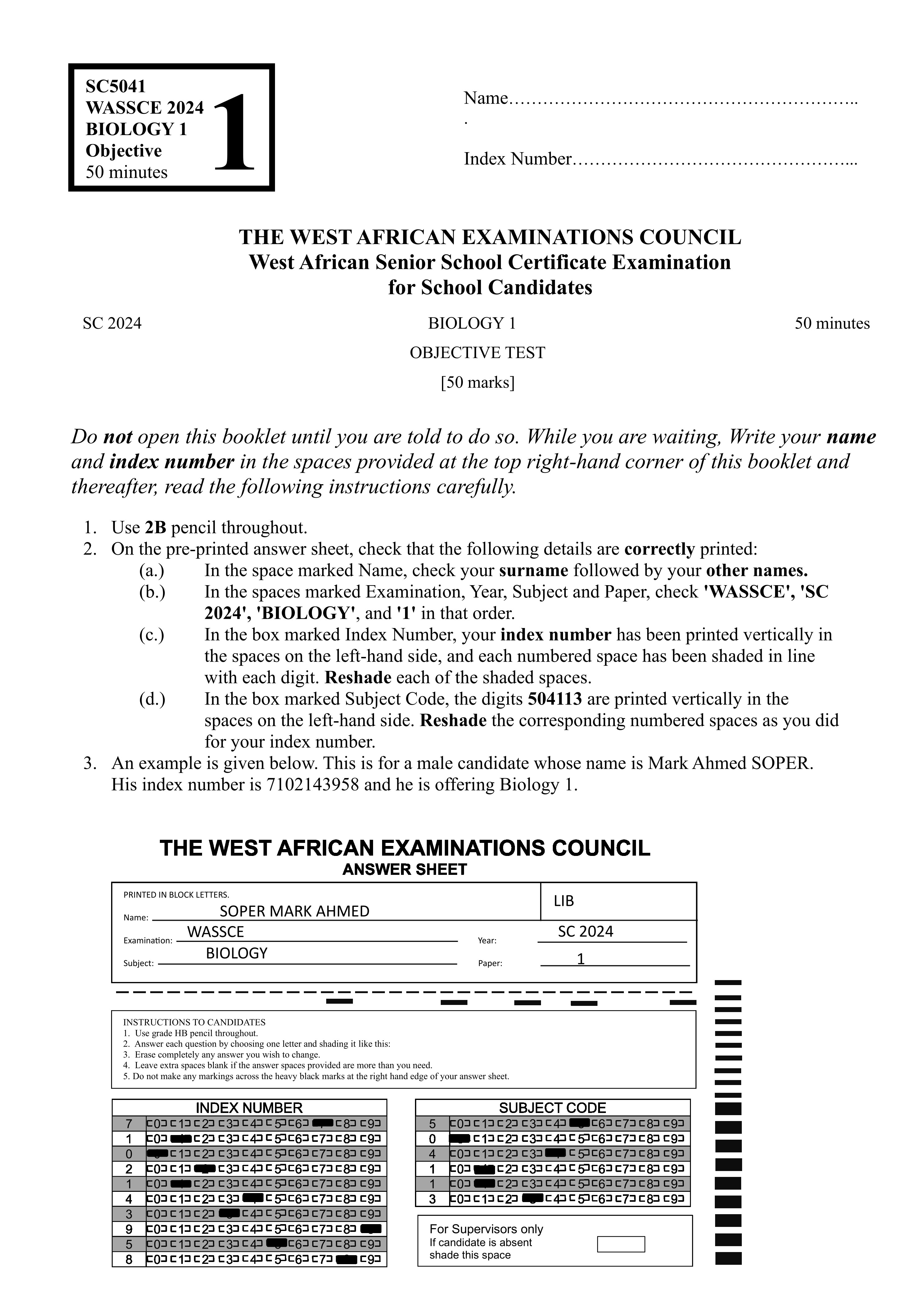
Answer all the questions
Each question is followed by four options lettered A to D. Find the correct option for each question and shade in pencil on your answer sheet, the answer space which bears the same letter as the option you have chosen. Give only one answer to each question. An example is given below.
Which part of the gill of fish is involved in gaseous exchange? Gill
A. slits
B. bars
C. covers
D. filaments
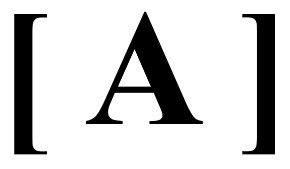
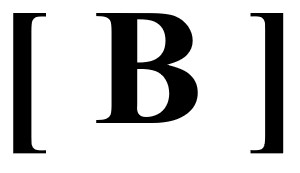
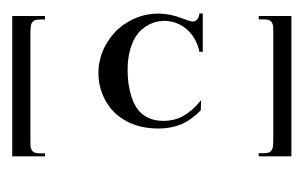
The correct answer is filaments, which is lettered D and therefore answer space D would be shaded.
Think carefully before you shade the answer spaces; erase completely any answer(s) you wish to change.
Do all rough work on this question paper.
Now answer the following questions.
Explanation:
The correct answer is: C. Robert Hooke
Robert Hooke was the first scientist to describe the "cell" in 1665. He observed small box-like structures in a thin slice of cork under a microscope and named them "cells" because they looked like the rooms where monks lived in monasteries.
Here’s why the other options are incorrect:
Explanation:
The correct answer is: C. Plant hormones
Auxins are plant hormones that help control plant growth and development. They are involved in processes like cell elongation, root formation, and how plants respond to light and gravity.
Here’s why the other options are incorrect:
Explanation:
The correct answer is: C. Phagocytosis
Phagocytosis is the process where certain cells, like protozoa, engulf and digest bacteria or other particles. In protozoa, this is a way of obtaining food, and it also acts as a defense in other cells like white blood cells.
Here's why the other options are incorrect:
Explanation:
The correct answer is: A. Group of similar cells which perform the same function
A tissue is made up of similar cells that work together to perform a specific job. For example, muscle tissue helps with movement, and epithelial tissue covers body surfaces.
Here’s why the other options are incorrect:
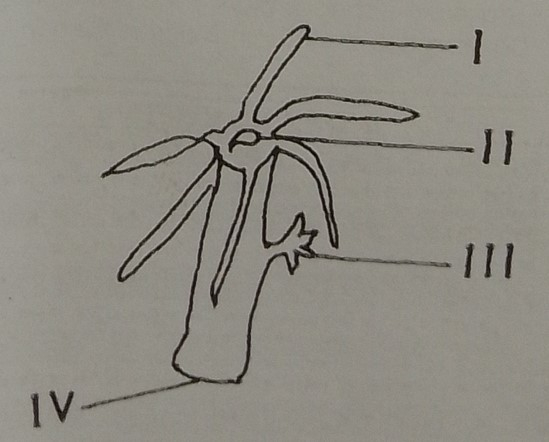
The diagram below is an illustration of an organism. Study it and answer questions 5 and 6.
Explanation:
The correct answer is:
A. tentacle
Topic: Hydra Body Structure
Structure I is a tentacle. Hydra uses its tentacles to capture and paralyze its prey. These flexible parts surround the Hydra's mouth and help with feeding. The tentacles have stinging cells called nematocysts.
Here's why the other answers are wrong:
Explanation:
The correct answer is:
C. III
Topic: Hydra Reproduction
Part III shows a bud. Hydra reproduces by budding, where a new organism grows from the parent's body. This bud will grow bigger and then break away to become a new Hydra that is exactly like the parent.
Here's why the other answers are wrong:
Explanation:
The correct answer is: C
Lysosomes are small parts inside cells that help break down things. They have special chemicals that can digest (break down) waste, old parts of the cell, or things the cell doesn’t need anymore.
This process is called intracellular digestion. It helps keep the cell clean and healthy.
Here's why the other answers are wrong:
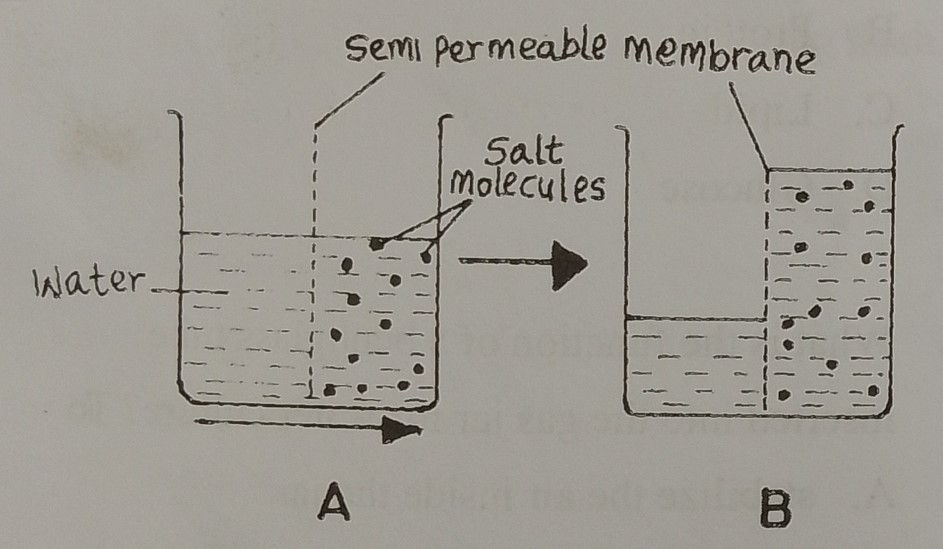
The diagram below is an illustration of a biological process. Study it and answer questions 8 and 9.
Explanation:
The correct answer is:
B. osmosis
Topic: Cell Transport Processes
The diagram shows osmosis. This is the movement of water across a semi-permeable membrane. Water moves from where there is more water (less salt) to where there is less water (more salt). The diagram shows water moving through the membrane to balance out the salt levels on both sides.
Here's why the other answers are wrong:
Explanation:
The correct answer is:
B. shows the movement of solvent through a semi-permeable membrane to a region of higher concentration of solutes
Topic: Osmosis Process
Diagram B shows the result after osmosis happens. The solvent (water) moved through the membrane from the left side to the right side where there was more salt. This movement continues until the salt levels become more equal on both sides. You can see the water level is now higher on the right side.
Here's why the other answers are wrong:
Explanation:
The correct answer is:
A. Carbon dioxide and ethanol
In yeast cells, when there is no oxygen, glucose is turned into carbon dioxide and ethanol. This is called alcoholic fermentation. It gives energy to the yeast and is used to make things like bread and alcohol.
Here's why the other answers are wrong:
Explanation:
The correct answer is:
D. Orange
Epigeal germination is when the seed leaves (cotyledons) come above the ground during sprouting. In orange plants, part of the stem (hypocotyl) grows longer and pushes the seed leaves above the soil.
Here is why the other plants are not correct:
Explanation:
The correct answer is:
C. Enhance attachment of muscles on bones
The protrusions on bones (like bumps or ridges) are places where muscles, tendons, and ligaments can attach. This helps muscles pull on the bones during movement. Without these points, it would be hard for muscles to move the bones properly.
Here's why the other answers are wrong:
Explanation:
The correct answer is:
A. Arthropods
Arthropods, like insects, spiders, and crabs, have an open circulatory system. This means their blood (called hemolymph) doesn’t stay inside blood vessels. Instead, it flows freely through the body and directly touches the organs.
Here’s why the other options are wrong:
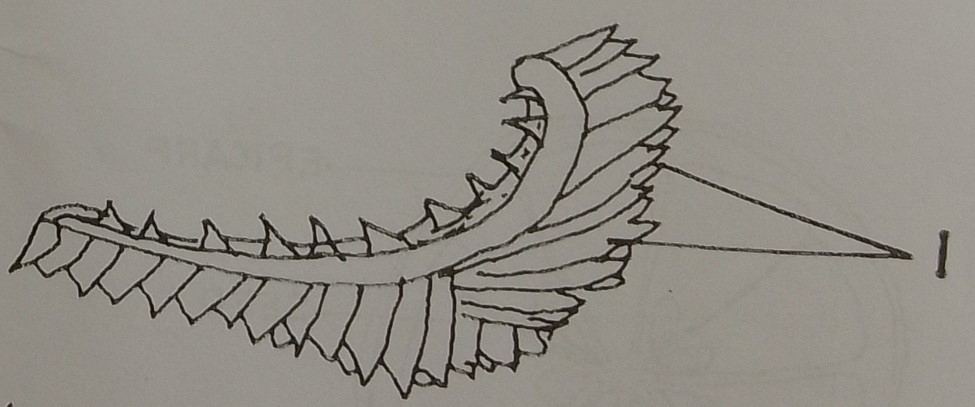
The diagram below is an illustration of a structure In organisms. Study it and answer questions 14 and 15.
Explanation:
The correct answer is:
D. gill
Topic: Respiratory Structures in Aquatic Animals
The structure shown is a gill. Gills are special body parts that help water animals breathe. They have a feathery shape with many thin parts that give lots of surface area for taking oxygen from water and getting rid of carbon dioxide.
Here's why the other answers are wrong:
Explanation:
The correct answer is:
B. gaseous exchange
Topic: Gill Function and Gas Exchange
Part I points to the gill filaments. These thin, finger-like parts are where gas exchange happens. They have lots of blood vessels close to the surface, so oxygen can move from the water into the blood, and carbon dioxide can move from the blood into the water.
Here's why the other answers are wrong:
Explanation:
The correct answer is:
C. The temperature of the environment rises above 38°C
When the temperature goes above 38°C, your body sweats more to cool down. As a result, your kidneys make less urine to keep more water in the body. This helps keep the right balance of water in your body.
Here’s why the other answers are wrong:
Explanation:
The correct answer is:
D. Chemical transmitters
Impulses move across the synapse (the gap between two nerve cells) using chemicals called neurotransmitters. These chemicals are released by one nerve cell and help send the signal to the next cell, allowing the message to pass through the nervous system.
Here’s why the other answers are wrong:
Explanation:
The correct answer is:
A. Semi-circular canals
The semi-circular canals in the ear help you keep your balance and know which way your head is moving. When a boxer is hit and falls, it’s usually because the semi-circular canals don’t work properly for a short time. After a few seconds, the balance comes back, and the person can stand up.
Here’s why the other answers are wrong:
The diagram below is an illustration of a section of a fruit. Study it and answer questions 19 and 20.
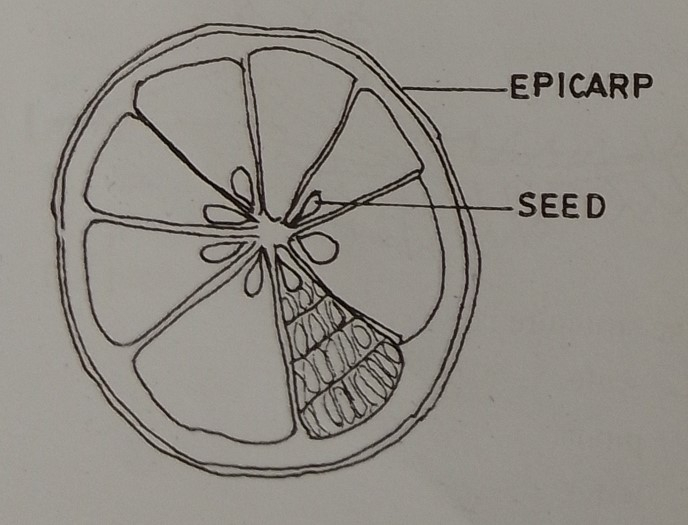
Explanation:
The correct answer is:
B. was cut through by a scalpel
Topic: Plant Structure Drawing
The epicarp is shown with double lines to show that a scalpel was used to cut through the fruit. This is how scientists draw cut sections of fruits to show what is inside them.
Here's why the other answers are wrong:
Explanation:
The correct answer is:
B. placentation is axile and section is transverse
Topic: Plant Fruit Structure
The diagram shows seeds attached to a center column inside the fruit. This is called axile placentation. The fruit was cut across its width, which is called a transverse section. This is how oranges and other citrus fruits are built inside.
Here's why the other answers are wrong:
Explanation:
The correct answer is:
D. Glucose
Topic: Photosynthesis Process
Glucose is the primary product of photosynthesis. During this process, plants use carbon dioxide, water, and sunlight to produce glucose and oxygen. This glucose serves as an energy source and building block for other organic compounds in the plant.
Here's why the other answers are wrong:
Explanation:
The correct answer is:
C. blow air into the jar
Topic: Water Culture Experiments
In water culture experiments, a bent glass tube is used to blow air into the gas jar. This supplies oxygen for root respiration and helps with proper gas exchange. It makes sure that the plant gets enough oxygen for its cellular processes while the roots are in the water solution.
Here's why the other answers are wrong:
Explanation:
The correct answer is:
D. Biuret test
Topic: Food Tests and Chemical Reactions
The Biuret test is used to detect proteins in a solution. It involves adding Biuret reagent to the sample, and a violet or purple color shows the presence of peptide bonds. Unlike other food tests, the Biuret test does not require heating to show a positive result.
Here's why the other answers are wrong:
The diagram below is an illustration of the skeletal part of an animal. Study it and answer questions 24 to 26.
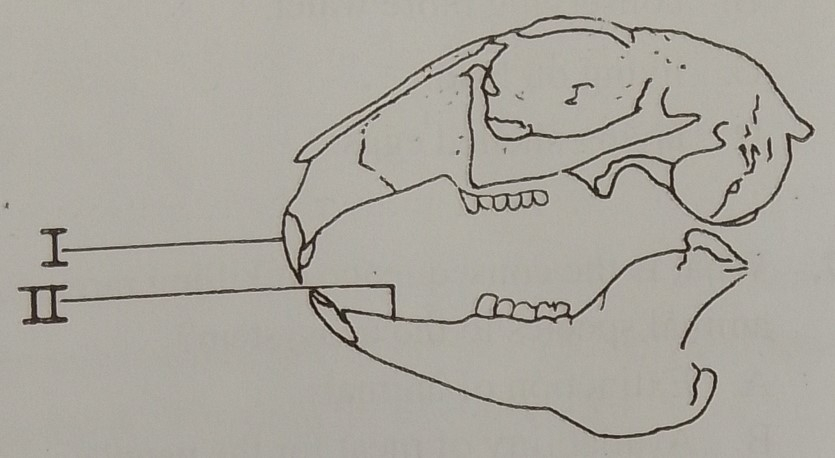
Explanation:
The correct answer is:
B. Herbivorous animals
Topic: Animal Teeth and Feeding Habits
The part labeled II shows the diastema, which is a gap between the front teeth (incisors) and the back teeth (molars and premolars). This gap is a special feature found in herbivorous animals. The diastema gives space for the tongue to move food around while chewing tough plant materials.
Here's why the other answers are wrong:
Explanation:
The correct answer is:
B. It allows the tongue to roll food
Topic: Function of Diastema in Herbivores
The diastema (part II) is a gap that gives the tongue space to move and roll plant food around in the mouth. This helps herbivorous animals move tough plant materials to their grinding teeth (molars) so they can chew their food properly before swallowing.
Here's why the other answers are wrong:
Explanation:
The correct answer is:
C. Incisor
Topic: Types of Teeth in Mammals
The part labeled I points to the incisors. These are the front teeth that have a flat, sharp edge like a chisel. Incisors are used for cutting and biting food. In herbivorous animals, the incisors help cut and grab plant materials before moving them back to the grinding teeth.
Here's why the other answers are wrong:
Explanation:
The correct answer is:
D. Swarming
Topic: Animal Survival Strategies
Swarming is a social behavior where animals like bees or locusts move in large groups. It is not mainly used to survive unfavorable conditions. Instead, it is used for reproduction, finding new homes, or protection from predators.
Here's why the other answers are wrong:
Explanation:
The correct answer is:
D. young trees gradually build up to form forest cover
Topic: Environmental Impact of Bushfires
Bushfires destroy vegetation, including young trees, rather than helping them grow. The gradual build-up of forest cover happens through natural forest growth and tree planting programs, not through bushfires. Bushfires actually cause the opposite effect by destroying existing forest cover.
Here's why the other answers are wrong:
Explanation:
The correct answer is:
A. grass
Topic: Energy Flow in Food Chains
In a food chain, energy decreases as you move from producers to higher levels. Grass is a producer that directly captures solar energy through photosynthesis, so it has the highest percentage of energy. Only about 10% of energy is transferred to each next level, meaning consumers like goats and lions get much less energy.
Here's why the other answers are wrong:
Explanation:
The correct answer is:
D. Abyssal zone
Topic: Marine Habitat Zones
The abyssal zone is the deepest part of the ocean and receives little to no sunlight. It is cold, dark, and under high pressure, with specialized organisms that have adapted to survive in these harsh conditions without light.
Here's why the other answers are wrong:
Explanation:
The correct answer is:
C. recycle mineral nutrients
Topic: Role of Decomposers in Ecosystems
Decomposers like bacteria and fungi break down dead organisms and waste products. This process releases mineral nutrients back into the soil, making them available for plants to use again. Decomposers play a critical role in nutrient cycling and keeping the ecosystem balanced.
Here's why the other answers are wrong:
The diagram below is an illustration of a plant. Study it and answer questions 32 to 33.
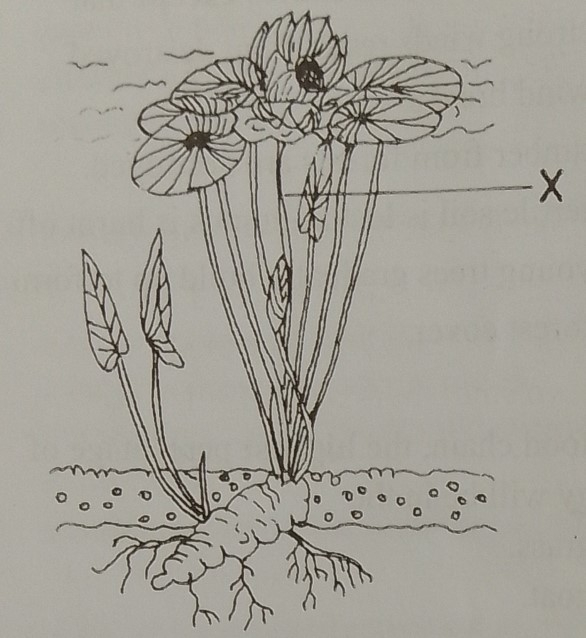
Explanation:
The correct answer is:
B. Flower stalk is long to reach pollinators
Topic: Plant Adaptations in Aquatic Environments
The part labeled X is the flower stalk. Its long length is an adaptation that allows the flower to reach the surface of the water. This helps the flower connect with pollinators like insects that fly above the water or land on the water surface.
Here's why the other answers are wrong:
Explanation:
The correct answer is:
B. lily
Topic: Identification of Aquatic Plants
The plant shown has broad, flat leaves that float on water and large flowers that bloom at the water surface. These features are typical of a water lily.
Here's why the other answers are wrong:
Explanation:
The correct answer is:
C. Pooter
Topic: Scientific Instruments for Insect Collection
A pooter is a simple tool used by scientists to collect small insects by suction. It has a jar with two tubes - one for sucking air and another for drawing in insects. It works well for collecting insects from soil litter and crevices without harming them.
Here's why the other answers are wrong:
Explanation:
The correct answer is:
D. Malaria
Topic: Disease Vectors and Transmission
Houseflies are mechanical vectors that carry germs on their bodies, legs, and mouth parts. They spread diseases by landing on dirty things and then on food or surfaces that people touch.
Malaria is different because it is only spread by female Anopheles mosquitoes, not houseflies. The malaria parasite must grow inside the mosquito before it can infect people.
Here's why the other answers are wrong:
Explanation:
The correct answer is:
B. Conserving more water
Topic: Water Conservation in Reptiles
Agama lizards excrete uric acid as a thick paste or solid instead of liquid urine. This saves a lot of water because very little water is needed to remove the waste. This helps the lizard survive in hot, dry places where water is hard to find.
Here's why the other answers are wrong:
Explanation:
The correct answer is:
A. Extinction of animals
Topic: Conservation and Ecosystem Balance
When rare animal species are killed, they can become extinct because there are already very few of them left. Once a species goes extinct, it is gone forever and can never come back. This hurts the ecosystem because every animal has a job to do in nature, like controlling other animal populations or spreading seeds.
Here's why the other answers are wrong:
Use the statements below to answer questions 38 and 39.
I – Turning off the tap when water is not In use
II – Burning bushes to kill mosquito larvae
III – Allowing farmlands to fallow
IV – Making rare animals reproduce in large numbers
Explanation:
The correct answer is:
C. I, III, and IV
Topic: Natural Resource Conservation Methods
Conservation means protecting and using natural resources wisely so they last longer. Let's look at each statement:
Here's why the other answers are wrong:
Explanation:
The correct answer is:
C. Wildlife
Topic: Biological Cycles in Conservation
A biological cycle means using living processes like reproduction, growth, and development. In the statements, only wildlife conservation uses biological cycles - making rare animals reproduce involves mating, pregnancy, and birth, which are all biological processes.
Here's why the other answers are wrong:
Explanation:
The correct answer is:
A. blood group
Topic: Types of Variation in Biology
Blood group is an example of discontinuous variation because it has clear and separate categories. People can only have blood type A, B, AB, or O. There are no blood types in between these groups.
Here's why the other answers are wrong:
Explanation:
The correct answer is:
C. b
Topic: Blood Groups and Antibodies
People with blood group A have A antigens on their red blood cells. Their body makes antibodies against the opposite type, which is anti-B antibodies (also called b antibodies). This protects them from receiving the wrong blood type.
Here's why the other answers are wrong:
Explanation:
The correct answer is:
C. AO, AA and OO
Topic: Blood Transfusion Compatibility
A person with blood group A can safely receive blood from donors with blood group A (both AA and AO genotypes) and blood group O (OO genotype). This is because their anti-B antibodies will not attack A antigens or the absence of antigens in O blood.
Here's why the other answers are wrong:
Explanation:
The correct answer is:
D. mutation
Topic: DNA Structure Changes
A mutation is a direct change in the DNA sequence of an organism. This change can happen because of environmental factors like radiation or chemicals, or it can occur naturally when DNA copies itself. Mutations actually alter the molecular structure of DNA by changing the order of its building blocks.
Here's why the other answers are wrong:
Explanation:
The correct answer is:
D. independent assortment of genes
Topic: Mendel's Laws of Inheritance
Mendel's second law is called the Law of Independent Assortment. This law says that different pairs of genes are passed to children independently of each other. For example, the gene for seed shape is passed down separately from the gene for seed color. This happens when genes are located on different chromosomes.
Here's why the other answers are wrong:
Explanation:
The correct answer is:
C. phenotype
Topic: Genetics Terms
Phenotype is the physical or observable characteristic of an organism that you can actually see or measure, such as eye color, height, or blood type. It is what the genes actually produce when they are expressed in the body and affected by the environment.
Here's why the other answers are wrong:
Two plants were crossed and the genotypes of the F1 generation were SS, Ss, Ss and ss.
The allele for smooth is S and wrinkled is S.
Use the information to answer questions 46 and 47.
Explanation:
The correct answer is:
D. three smooth, one wrinkled
Topic: Genetics - Phenotype from Genotype
The offspring genotypes are SS, Ss, Ss, and ss. Since S is the dominant allele for smooth and s is the recessive allele for wrinkled, any genotype with at least one S will show the smooth phenotype. Only ss will show the wrinkled phenotype because it has no dominant allele.
Here's why the other answers are wrong:
Explanation:
The correct answer is:
C. Ss and Ss
Topic: Genetics - Parent Genotypes from Offspring
The F1 offspring show the pattern SS, Ss, Ss, and ss, which is the classic 1:2:1 genotype ratio. This pattern only happens when two heterozygous parents (both Ss) are crossed together. Each parent contributes either S or s, creating all possible combinations.
Here's why the other answers are wrong:
Explanation:
The correct answer is:
D. the uniformity of embryonic stages of vertebrates
Topic: Evidence for Evolution
The similarity in embryonic development stages across different vertebrates is strong evidence that all these animals evolved from a common ancestor. For example, the embryos of fish, birds, and mammals all show similar features like gill slits and tails in their early stages, even though adults look very different.
Here's why the other answers are wrong:
Explanation:
The correct answer is:
A. natural selection
Topic: Mechanisms of Evolution
Natural selection is the way nature keeps the good changes in animals and plants. Animals with good traits live longer and have more babies. Animals with bad traits die more often and have fewer babies. Over time, this keeps all the good changes that make animals better at surviving.
Here's why the other answers are wrong:
Explanation:
The correct answer is:
A. Jean Lamarck
Topic: Early Ideas About Evolution
Jean Lamarck came up with the idea that animals grow new body parts when they need them and lose body parts they do not use. For example, he thought giraffes got long necks because they kept stretching to eat leaves high up in trees. This idea is called the theory of use and disuse.
Here's why the other answers are wrong:
Our Mission: To provide free, accessible, and comprehensive exam preparation resources for West African students preparing for their WASSCE and LJHSCE examinations.
StudyWASSCE was created in 2023 by an independent content creator who recognized a critical gap in accessible educational resources for West African students. After witnessing countless students struggle to find quality past examination papers and affordable study materials, I dedicated myself to building a comprehensive, completely free platform that would level the playing field for all students, regardless of their economic background.
As an independent educational content creator, I have invested countless hours researching, compiling, and organizing past examination papers from official sources. My commitment stems from a deep belief that every student deserves access to quality educational resources, regardless of their financial circumstances.
Unlike general educational platforms, StudyWASSCE specializes exclusively in:
StudyWASSCE operates on a sustainable model that keeps education free while ensuring quality:
Since launching, StudyWASSCE has:
As an independent creator, I am committed to:
We welcome partnerships with:
As the independent creator behind StudyWASSCE, I personally respond to:
Response Commitment: I personally review and respond to all messages within 48-72 hours.
Education transformed my life, and I believe it can transform the lives of every student who has access to quality resources. StudyWASSCE represents my personal commitment to ensuring that no student is left behind due to lack of access to study materials. Every hour I spend improving this platform is an investment in the future of West African education.
Thank You for Your Support! By using StudyWASSCE and viewing our advertisements, you help sustain this free educational resource. Your success is our success, and every student who passes their examinations using our materials validates our mission.
StudyWASSCE: Created by an independent educator, for students everywhere.
Empowering West African students through free, accessible education.
StudyWASSCE is an independent educational platform created to provide free access to past exam papers and study materials for WASSCE and LJHSCE examinations. We are committed to helping students succeed while maintaining transparency about our data practices.
To improve our service and comply with advertising requirements, we collect the following information:
We use collected information to:
Our site is supported by advertising to keep educational content free. We work with the following third-party services:
We do not sell or rent personal information. We may share data with:
Required for Site Access: By using StudyWASSCE, you consent to our data collection practices as described in this policy. This includes:
Your Options:
Note: Continued use of our platform indicates your ongoing consent to these practices.
We implement appropriate technical and organizational security measures to protect the information we collect. However, no internet transmission is completely secure, and we cannot guarantee absolute security.
Our site is designed for students of all ages. We do not knowingly collect personal information from children under 13 without parental consent. If you believe we have collected such information, please contact us immediately.
Our site is hosted and operated from servers that may be located in different countries. By using our site, you consent to the transfer of your information to these locations.
We may update this privacy policy periodically to reflect changes in our practices or legal requirements. We will post any changes on this page with an updated revision date. Continued use of our site after changes constitutes acceptance of the updated policy.
If you have any questions about this privacy policy or our data practices, please contact us via WhatsApp at +231-770450825, by email at davidlamine96@gmail.com, or through our Facebook page @Study For WASSCE.
Last Updated: January 15, 2025
Important Notice: By using StudyWASSCE, you agree to these Terms of Service and our Privacy Policy. This site uses cookies and displays advertisements to provide free educational content.
StudyWASSCE is an independent educational platform created and maintained by a dedicated content creator who has worked extensively to compile and organize past examination papers for WASSCE (West African Senior School Certificate Examination) and LJHSCE (Liberian Junior High School Certificate Examination). Our mission is to provide free access to quality educational resources for students preparing for these national examinations.
All examination papers, questions, and educational materials on this platform have been carefully curated from publicly available past examination papers. We provide:
By accessing, browsing, or using StudyWASSCE in any way, you acknowledge that you have read, understood, and agree to be bound by these Terms of Service and our Privacy Policy. If you do not agree to these terms, please discontinue use of our platform immediately.
StudyWASSCE provides completely free access to all educational content. You are not required to:
To maintain this free service, StudyWASSCE is supported by:
Required for Free Access: Advertisements are essential to maintaining our free educational service. By using StudyWASSCE, you consent to the display of advertisements throughout the platform.
Our advertising practices comply with Google AdSense policies:
Essential for Site Operation: StudyWASSCE uses cookies for:
By using our site, you consent to our use of cookies as described in our Privacy Policy.
StudyWASSCE grants you a limited, non-exclusive, non-transferable license to access and use our content for personal educational purposes only. You may:
You may NOT:
While individual examination questions may be public domain, our compilation, organization, explanations, and presentation represent original work protected by intellectual property rights.
We use Google Analytics to collect anonymous usage data to improve our educational content and user experience. This includes:
We use this data to:
Users must:
StudyWASSCE is designed for students of all ages. Users under 13 should have parental consent before using our platform, particularly regarding cookie acceptance and data collection.
While we strive for accuracy in all educational content:
Important: StudyWASSCE is a study supplement and should not replace formal education, textbooks, or qualified instruction. Users should use our resources alongside official study materials and classroom learning.
We strive to maintain consistent platform availability, but cannot guarantee:
We reserve the right to:
We are committed to protecting user privacy while providing free educational services. Our data collection practices are detailed in our Privacy Policy and comply with:
Our platform integrates with reputable third-party services that have their own privacy policies:
StudyWASSCE is provided "as is" for educational purposes. We disclaim liability for:
In no event shall StudyWASSCE be liable for any indirect, incidental, special, or consequential damages arising from platform use, even if advised of the possibility of such damages.
Our advertising practices comply with:
We respect intellectual property rights and maintain compliance with copyright laws regarding educational fair use of examination materials.
We regularly update our platform with:
We reserve the right to modify these Terms of Service to:
Updated terms will be posted on this page with revision dates. Continued use after changes constitutes acceptance of updated terms.
These Terms of Service shall be governed by and construed in accordance with the laws of the Republic of Liberia. Any disputes arising from these terms or platform use shall be subject to the jurisdiction of Liberian courts.
If any provision of these Terms of Service is found to be unenforceable or invalid, that provision shall be limited or eliminated to the minimum extent necessary so that the remaining terms remain in full force and effect.
These Terms of Service, together with our Privacy Policy, constitute the entire agreement between you and StudyWASSCE regarding platform use and supersede all prior agreements or understandings.
For questions about these Terms of Service, content issues, or platform feedback, please contact us through:
For Urgent Issues: Technical problems affecting site access, inappropriate advertisements, or content errors.
For Partnership Inquiries: Educational institutions, content contributors, or collaboration opportunities.
Thank you for using StudyWASSCE! Your use of our platform helps us continue providing free educational resources to students across West Africa. We appreciate your support through advertisement viewing and ethical use of our content.
© 2025 StudyWASSCE. All rights reserved.
Supporting West African education through free access to quality study materials.